Before Simulators Had a Name
There are moments in childhood that don’t just entertain you — they wire something deep inside your brain.
You don’t realise it at the time. You don’t name it. You just know that something happened — something that stays with you for decades.
For me, that moment happened somewhere around the age of 10 or 12, sitting in front of an Amiga, staring at a screen that — by today’s standards — was primitive, angular, rough… and yet absolutely mind-blowing.
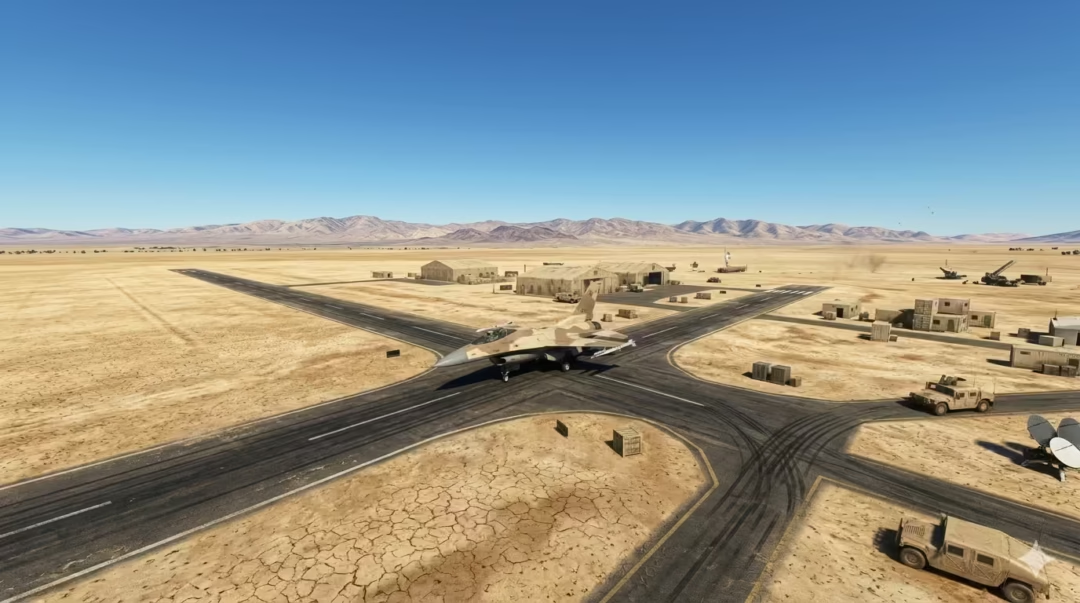
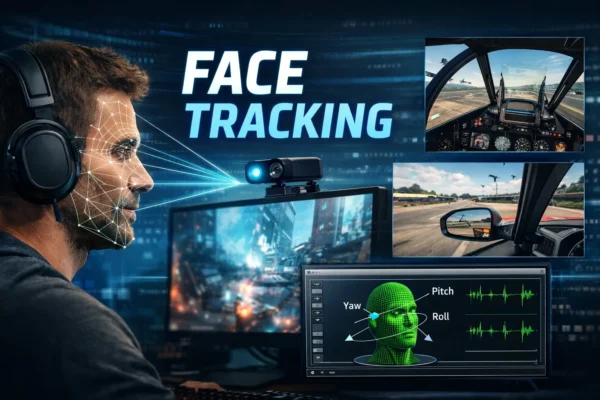
Back then, we didn’t talk about immersion. We didn’t talk about flight sim head tracking. We didn’t talk about IR tracking or six degrees of freedom.
We just said: “This feels real.”
And one particular game did exactly that to me. For over 30 years, I remembered the feeling — but not the name.
The Amiga Years – When Imagination Did the Heavy Lifting
If you grew up in the late 80s or early 90s, you already know this truth: games didn’t need photorealistic graphics to feel real.
They needed a strong idea, believable movement, consistency — and just enough visual logic for your brain to fill in the gaps.
The Amiga was my first real computer. Not a toy. Not a console. A machine. It booted slowly, loaded from floppy disks, and crashed without warning. But when it worked — it opened a door.
I played many great titles. Cannon Fodder. Walker. Colorado. Countless others. Yet one game stood completely apart — not because it was famous or polished, but because it gave me something I had never experienced before.
A feeling of space.
Desert Wolf – The First Time I Felt Like Real 3D Flight
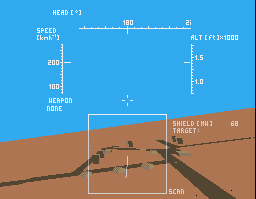
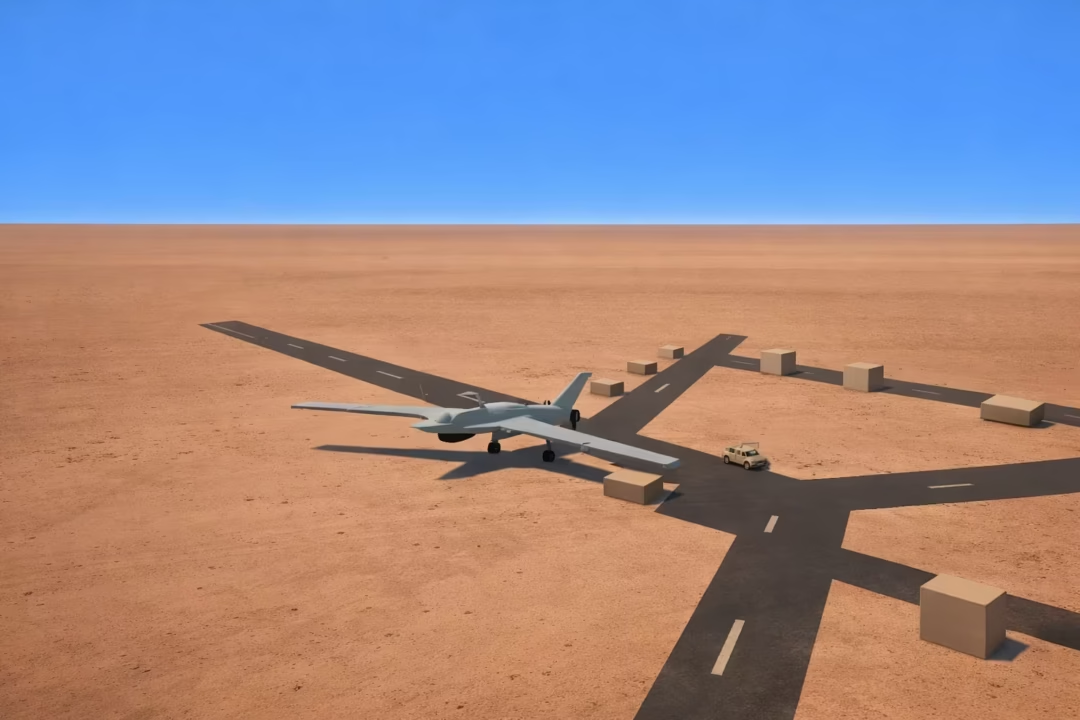
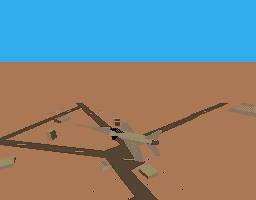
The game was simple. You were flying a jet fighter, viewed from behind the aircraft — not inside a cockpit, not as a 2D sprite scrolling across the screen. Below you stretched a vast, empty desert: flat terrain, sand-coloured surface, long straight roads drawn like lines across the ground.
There were targets on the surface. You flew toward them. You fired real projectiles — and watched them travel through space.
No complex systems. No detailed HUD. No hand-holding tutorials. Just: take off, find the target, destroy it. Mission complete.
And yet — it felt like true 3D flight.
Not because it was accurate. But because it was convincing.

Why Primitive 3D Felt Revolutionary
Looking back today, the answer is obvious. That game didn’t try to simulate everything. It simulated just enough.
It gave you perspective, motion, and cause and effect. You moved → the world responded. You aimed → the projectile travelled. You turned → the horizon shifted.
That’s all the brain needs to believe.
This is something simulation designers often forget: immersion is not about graphics — it’s about consistency.
The 30-Year Search for a Name
For decades, I remembered the feeling. But not the title.
Only fragments stayed: Desert… Wolf… something small… something Polish…
And yet that memory kept resurfacing. Because it wasn’t just a game — it was my first real experience of simulated flight.
Eventually, after hours of searching, chasing dead links and wrong guesses, I found it.
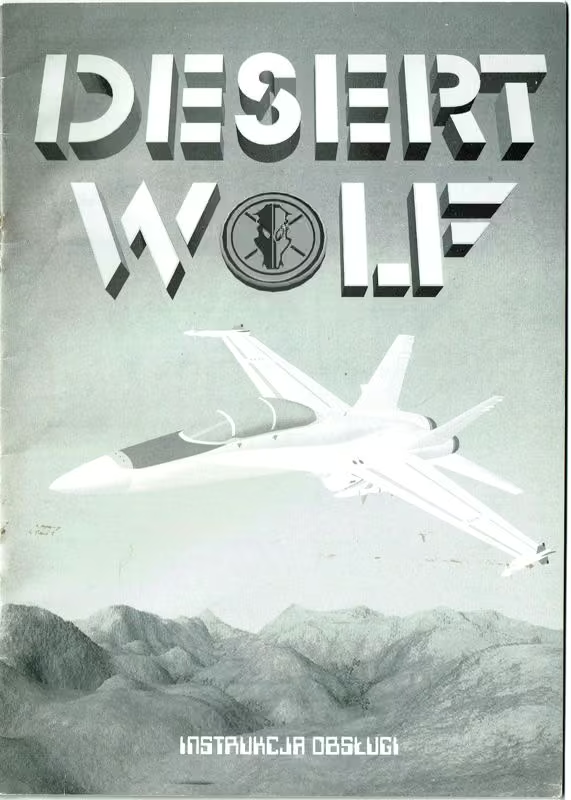
Desert Wolf. Amiga, 1996. A small, Polish-developed title . A niche release that never made it into mainstream gaming history. Exactly as I remembered — the desert, the jet, the camera, the space. All there.
Seeing those screenshots felt like opening a time capsule.
From That Desert to Building Real Hardware
Fast forward many years. I’m no longer a kid sitting in front of an Amiga. I’m building real hardware, running a real company, shipping products to sim pilots all over the world.
Delan Engineering didn’t start as a business plan. It started from a single question that’s followed me since childhood:
How do we make virtual experiences feel real?
Flight simulators evolved. Screens got sharper. Physics got more complex. But one thing stayed exactly the same: your head doesn’t stop moving.

How Flight Sim Head Tracking Changed Everything
When modern flight sims introduced head tracking, something clicked immediately.
Moving your head — and watching the virtual world respond naturally — felt familiar. It felt like an evolution of that same presence I experienced as a kid flying over a simple desert landscape.
Without knowing it as a child, I had already felt the foundation of what we now call spatial awareness, situational awareness, pilot perspective. Desert Wolf gave me that with simple geometry and a camera behind an aircraft.
Today, flight sim head tracking gives you that with six degrees of freedom and millimetre precision.
With a proper IR tracking setup, you can look into turns naturally, track targets instinctively, and maintain full situational awareness without thinking. It’s not a feature. It’s a transformation.
If you’re serious about DCS World, MSFS, or any advanced simulator, DelanClip Fusion Pro is built exactly for this — accurate, reliable IR head tracking that disappears in use, so you can focus entirely on flying.
Why IR Tracking for Flight Simulators Is About Presence, Not Graphics
Head tracking doesn’t add new graphics. It doesn’t add new missions. It adds presence.
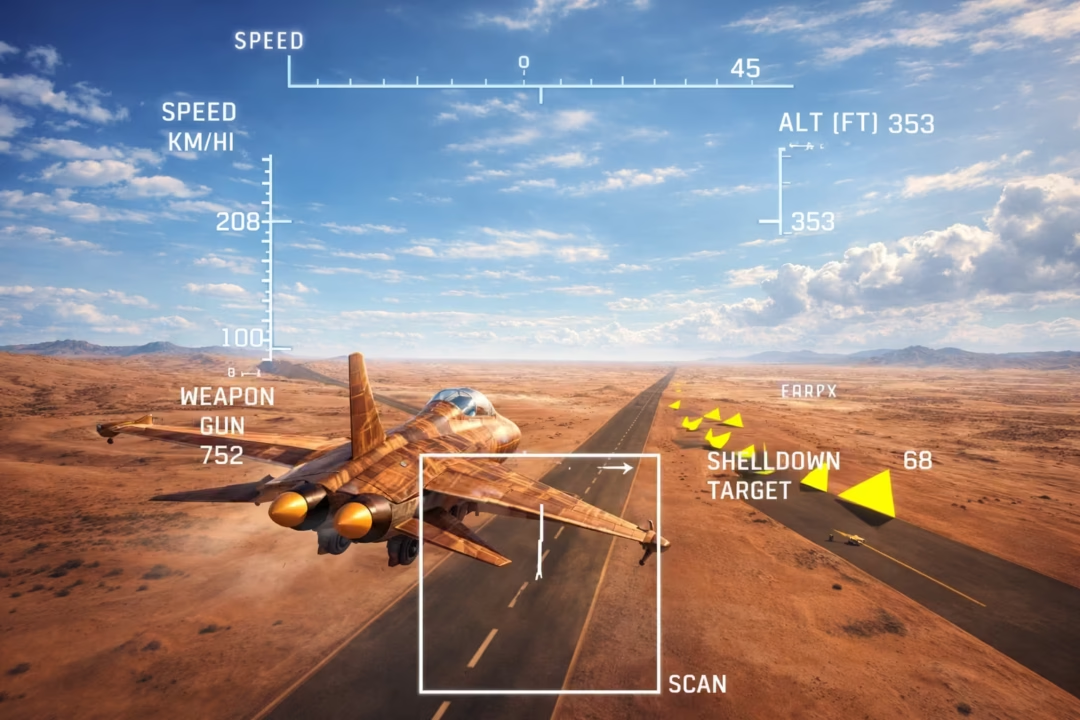
The same presence that Desert Wolf created in 1996 with flat terrain and a camera — IR tracking creates today with precise head movement data fed directly into your simulator.
Your brain connects motion with vision. Your body feels part of the environment. Your reactions become instinctive.
That’s the difference between playing a simulation and being inside one.
Modern simulators like DCS and MSFS are visually stunning — but visuals alone don’t create immersion. Movement does. And DelanClip Fusion Pro is the most direct way to add that movement to your setup — used by over 50,000 sim pilots worldwide.
If You're 40+ and Reading This…
There’s a good chance you understand exactly what I’m talking about.
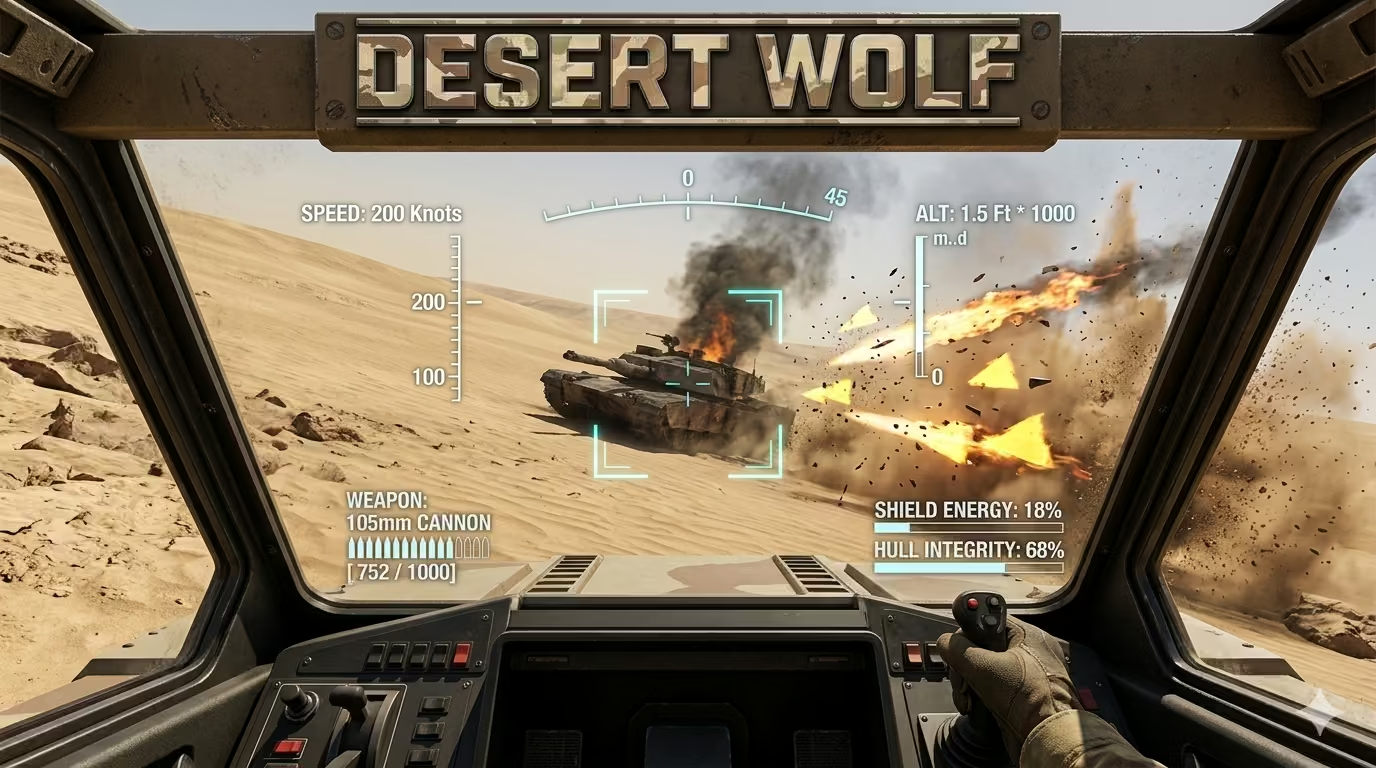
You probably remember one specific game, one specific feeling, one moment that stayed with you — even if you forgot the name decades ago.
That’s not accidental. Those early Amiga flight simulator games didn’t just entertain us — they formed how we think about space, movement, and immersion. They made us engineers, pilots, creators, builders.
They taught us that the feeling of something matters more than its technical specs.

Closing the Circle – From Desert Wolf to DelanClip
Finding Desert Wolf wasn’t about replaying it. It was about understanding something deeper: why I still care so much about simulation. Why immersion still matters. Why I build what I build.
The technology changed. The feeling didn’t.
And that’s why, every time someone installs a DelanClip and says “I forgot I was wearing it — it just felt natural” — I smile. Because that’s exactly how it felt, sitting in front of an Amiga, flying over a desert that didn’t really exist… and yet felt completely real.
Some things don’t disappear. They just wait until you’re ready to understand them.
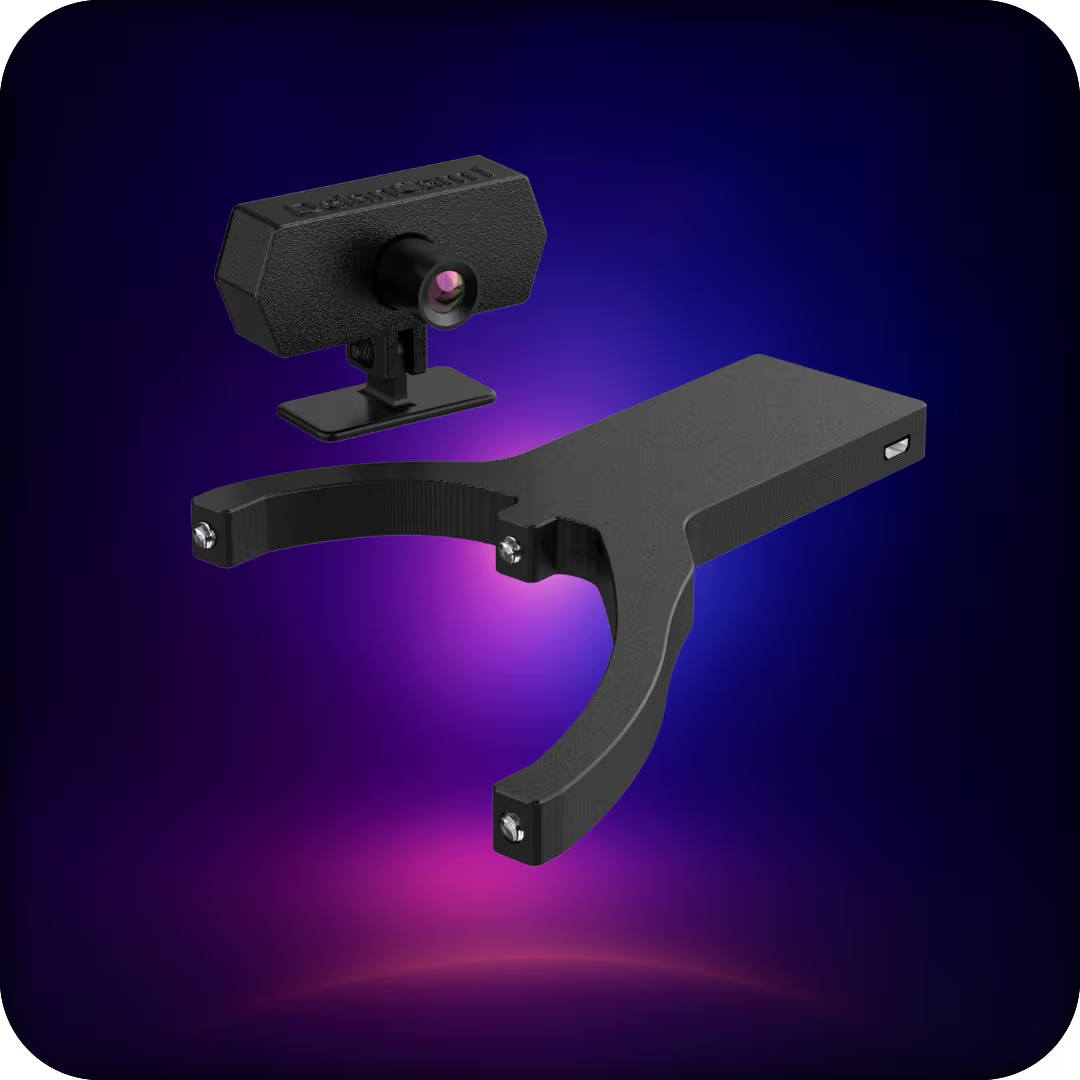
Ready to feel that again? DelanClip Fusion Pro brings that same sense of natural, effortless immersion to your modern sim setup — no fuss, no gimmicks, just head tracking that works.
Conclusion - Immersion Never Changed, Only the Tools Did
Desert Wolf didn’t teach me about graphics or processing power.
It taught me that immersion is a feeling — and that feeling comes from one thing: the world responding naturally to your movement.
That idea didn’t start with head tracking. It didn’t start with DelanClip. It started with a flat desert, a jet fighter, and a camera placed behind an aircraft on a 1996 floppy disk.
Thirty years later, I still build things for the same reason I played that game.
Not for the specs. Not for the features.
For that moment when technology stops being technology — and just feels real.
Some things don’t disappear.
They just wait until you’re ready to understand them.